
 Pay Online

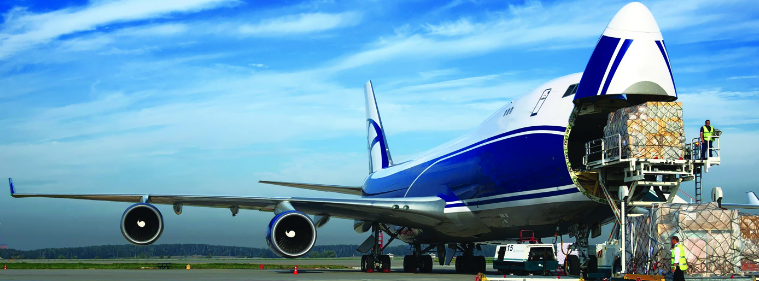
In 2026, global trade is becoming faster, smarter, and more technology-driven than ever before. Businesses are increasingly relying on air freight services to move products across international markets quickly, while artificial intelligence (AI) is transforming how shipments are planned, tracked, managed, and delivered. The combination of AI air freight and advanced logistics technology is creating a new generation of intelligent, efficient, and reliable global supply chains.
The Rise of AI in Air Freight
Traditional air cargo services often depend on manual processes, historical data, and fixed schedules. Today, AI-powered systems can analyze enormous amounts of information in real time, including shipment volumes, weather conditions, flight schedules, airport congestion, fuel costs, customs requirements, and customer demand.
This enables air freight logistics providers to make faster and more accurate decisions. AI can predict potential delays, recommend alternative routes, optimize cargo capacity, and identify the most cost-effective transportation options.
For companies involved in international air freight, these capabilities can significantly improve operational efficiency while reducing unnecessary transportation costs.
Smarter Digital Freight Forwarding
AI is also transforming freight forwarding services through automation and digital platforms. Modern digital freight forwarding solutions allow businesses to manage bookings, documentation, quotations, customs information, and shipment updates through centralized digital systems.
Instead of relying on multiple emails and phone calls, businesses can use AI-powered platforms to automate repetitive processes. Shipping automation reduces paperwork and minimizes human errors, allowing logistics teams to focus on more strategic activities.
AI-powered air cargo management systems can also compare available routes and carriers, helping businesses select the most suitable option based on price, transit time, capacity, and service requirements.
Real-Time Cargo Tracking and Visibility
One of the biggest developments in global logistics services is real-time shipment visibility. Businesses increasingly expect to know exactly where their cargo is at every stage of transportation.
Modern cargo tracking platforms combine AI, IoT sensors, GPS, and cloud-based technology to provide real time shipment tracking. Companies can receive alerts when shipments are delayed, rerouted, or exposed to conditions that could affect the cargo.
For door to door air freight, this visibility is particularly valuable because the shipment can be monitored from the supplier’s location through airport handling and customs clearance to the final delivery point.
Optimizing Costs and Capacity
Air transportation is generally faster than ocean or road freight but can be more expensive. Therefore, freight cost optimization has become a major priority for businesses.
AI can analyze historical and current air freight rates, cargo volumes, fuel prices, available aircraft capacity, and market demand to identify better transportation options. It can also optimize cargo consolidation and load planning.
For an air freight company, improved capacity utilization means fewer empty spaces and more efficient aircraft operations. For customers, it can translate into more competitive pricing and better service reliability.
Time-Critical and High-Value Shipments
Industries dealing with urgent, sensitive, or high-value products benefit significantly from AI-driven logistics. Time critical logistics can help businesses respond quickly when production components, spare parts, medical products, or other essential goods need immediate transportation.
AI-powered urgent cargo shipping solutions can identify the fastest available routes while considering airport congestion, flight schedules, customs requirements, and potential disruptions.
Similarly, high value cargo shipping requires enhanced security and monitoring. AI can help identify unusual shipment patterns and potential risks while providing continuous visibility throughout transportation.
Cold Chain and Pharmaceutical Logistics
The pharmaceutical and healthcare industries require highly controlled transportation environments. Cold chain air freight uses temperature-controlled handling and specialized packaging to protect sensitive products.
AI and IoT technologies can continuously monitor temperature, humidity, location, and handling conditions. If temperatures move outside acceptable limits, automated alerts can be generated so logistics teams can respond immediately.
This makes AI particularly valuable for pharmaceutical logistics, vaccines, biotechnology products, and other temperature-sensitive shipments.
Supporting eCommerce and International Trade
The rapid growth of global eCommerce is creating strong demand for faster eCommerce air freight solutions. Online retailers need reliable transportation networks capable of handling thousands of individual shipments across different countries.
AI can forecast customer demand, optimize inventory positioning, automate shipping decisions, and select suitable transportation methods. This helps businesses improve delivery times while controlling import export logistics costs.
For companies operating airport to airport shipping as well as door-to-door models, AI provides greater flexibility and operational visibility.
AI and Sustainable Air Freight
Sustainability is another important logistics trend 2026. While air freight remains a carbon-intensive transportation option, AI can help reduce unnecessary emissions.
Intelligent route optimization, better aircraft capacity utilization, reduced empty capacity, and improved fuel planning can contribute to more sustainable air freight operations.
AI can also help companies compare transportation alternatives and select solutions that balance delivery speed, cost, and environmental impact.
The Future of Global Supply Chains
AI-driven international freight forwarding is moving the logistics industry from reactive management toward predictive supply chain management. Instead of waiting for a shipment problem to occur, businesses can use AI to identify potential disruptions before they happen.
This supports better supply chain optimization, improved customs clearance, faster decision-making, and greater resilience. From air cargo shipping and freight transportation to warehouse operations and final delivery, AI is connecting different stages of the supply chain into a more intelligent digital ecosystem.
In 2026, businesses that adopt AI-powered logistics solutions can gain significant advantages in speed, visibility, reliability, and cost control. Whether handling urgent shipments, pharmaceutical products, eCommerce orders, or international commercial cargo, intelligent air freight technology is becoming a critical component of modern global supply chains.
The future of air freight is no longer simply about moving cargo from one airport to another. It is about using AI logistics, automation, predictive analytics, and real-time data to create faster, smarter, and more resilient global trade networks.