
 Pay Online

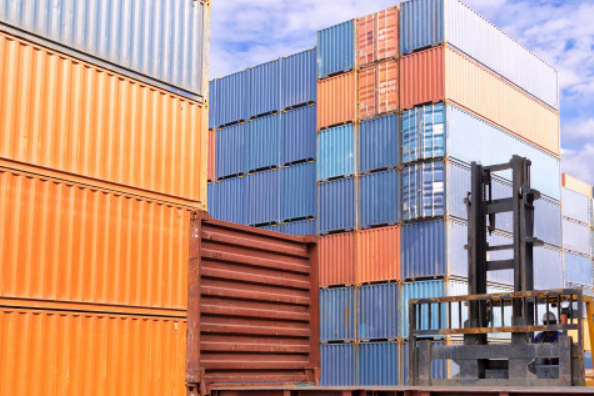
Despite rapid advances in air cargo, digital platforms, and nearshoring strategies, sea freight
forwarding continues to dominate global trade in 2026. Accounting for nearly 90% of world
trade by volume, maritime transport remains unmatched in scale, efficiency, and
cost-effectiveness. In an era shaped by supply chain disruptions, sustainability pressures, and
shifting trade routes, the sea freight importance has only grown stronger.
This article explores why ocean freight logistics still form the global supply chain backbone,
and how modern maritime shipping services have evolved to meet the demands of today’s
complex logistics landscape.
The Unmatched Scale of Sea Freight
1. Sea Freight Handles the World’s Trade Volume
No other mode of transport comes close to the capacity of ocean shipping. From raw materials
and energy products to consumer goods and industrial equipment, sea freight is the only viable
solution for moving massive volumes across continents.
In 2026:
● Container ships carry over 20,000 TEUs per voyage
● Bulk carriers support global food and energy security
● Project cargo vessels move oversized infrastructure components
This sheer capacity reinforces sea freight importance as the foundation of international
commerce.
Cost Efficiency: The Core Advantage
2. Lowest Cost Per Unit Over Long Distances
One of the main reasons sea freight remains dominant is its superior cost efficiency. When
measured per ton-kilometer, ocean freight logistics is significantly cheaper than air, road, or
rail—especially for long-haul routes.
Sea freight forwarding enables:
● Lower transportation costs for manufacturers
● Competitive pricing for global exporters
● Affordable imports for consumer markets
In a cost-sensitive global economy, this makes sea freight the natural choice and a true global
supply chain backbone.
Reliability in a Volatile World
3. Sea Freight Adapts Better to Disruptions
While global logistics has faced port congestion, geopolitical tensions, and climate-related
disruptions, sea freight forwarding has proven its resilience. Shipping lines and forwarders have
adapted through:
● Route diversification
● Strategic transshipment hubs
● Improved schedule recovery strategies
Compared to air freight, which is highly sensitive to fuel prices and capacity constraints,
maritime shipping services offer more stability over time.
Technological Transformation of Ocean Freight
4. Digitalization Has Redefined Sea Freight Forwarding
In 2026, sea freight is no longer a slow, opaque process. Digital platforms now enable:
● Real-time vessel tracking
● Electronic Bills of Lading (eBL)
● Predictive ETA analytics
● Automated customs documentation
These innovations have strengthened ocean freight logistics, making sea freight forwarding
more transparent, efficient, and customer-centric than ever before.
Sustainability and Environmental Responsibility
5. Sea Freight Is the Greenest Mode for Long Distances
Sustainability has become a central focus of global logistics, and sea freight plays a critical role.
Compared to air freight, maritime transport produces significantly lower carbon emissions per
unit of cargo.
In response to environmental regulations, maritime shipping services are adopting:
● Low-sulfur and alternative fuels
● Energy-efficient vessel designs
● Slow steaming practices
● Carbon reporting and offset programs
This reinforces sea freight importance in building greener, more responsible supply chains.
Sea Freight as the Backbone of Global Manufacturing
6. Supporting Global Production Networks
Modern manufacturing relies on complex, multi-country supply chains. Components may be
sourced from several regions before final assembly and distribution. Only sea freight can
support this scale efficiently.
Sea freight forwarding enables:
● Reliable raw material flows
● Just-in-time inventory replenishment
● Cost-effective intercontinental sourcing
Without ocean freight logistics, global manufacturing ecosystems would simply not function.
..Strategic Role in Emerging Markets
7. Enabling Trade Growth in Developing Economies
Ports and maritime infrastructure are critical to economic development. In Asia, Africa, and the
Middle East, investments in ports, shipping lanes, and logistics parks are strengthening sea
freight’s role as the global supply chain backbone.
For emerging economies, maritime shipping services:
● Facilitate exports
● Attract foreign investment
● Support industrialization
● Integrate local businesses into global trade
Sea freight forwarding remains the gateway to international markets.
Flexibility Across Cargo Types
8. From Containers to Project Cargo
One of the biggest strengths of sea freight is its versatility. Modern shipping supports:
● FCL and LCL containerized cargo
● Bulk commodities (grain, coal, oil)
● Breakbulk and Ro-Ro cargo
● Heavy lift and project cargo
This flexibility ensures sea freight importance across industries—from FMCG and retail to
energy, construction, and infrastructure.
Risk Management and Supply Chain Stability
9. Better Risk Distribution Compared to Air Freight
Sea freight allows shippers to diversify risk through:
● Multiple carrier options
● Alternative ports and routes
● Flexible sailing schedules
Freight forwarders play a critical role in planning contingencies, making ocean freight logistics
more resilient to shocks than many faster but more fragile transport modes.
The Role of Freight Forwarders in 2026
10. More Than Transport—Strategic Partners
In 2026, sea freight forwarders are no longer just intermediaries. They act as:
● Supply chain advisors
● Compliance experts
● Cost optimization partners
● Digital integration specialists
Their expertise ensures maritime shipping services are optimized for cost, speed,
compliance, and sustainability—strengthening sea freight’s position as the global supply chain
backbone.
Final Thoughts
While logistics continues to evolve, the fundamentals remain unchanged. Scale, cost efficiency,
reliability, and sustainability all point to one conclusion: sea freight forwarding remains the
backbone of global logistics in 2026.
As trade volumes grow and supply chains become more interconnected, the sea freight
importance will only increase. Supported by advanced ocean freight logistics and innovative
maritime shipping services, sea freight will continue to anchor global commerce for decades
to come.